BIBO vs. Standard HEPA Filter Replacement: Why Safe-Change Housing Matters in Laboratories and Hospitals

A clear difference exists between traditional filter handling and controlled containment systems. In places where air quality matters deeply, even a routine filter replacement can quietly bring some risk along with it. A contaminated filter does not just sit there harmlessly. Once handled, it can release airborne contamination that may drift into the surrounding environment and affect people nearby. Because of this, BIBO HEPA filter replacement has gained attention as a safer and more controlled approach. Through enclosed handling and bag in bag processes, risks are reduced, and compliance becomes easier to maintain. As a result, both laboratories and healthcare facilities now rely on systems designed to minimize the risk during filter removal and installation.
Why Does HEPA Filter Replacement Carry Hidden Risks?
A high-efficiency particulate air filter keeps collecting tiny particles day after day. Eventually, all that buildup changes how the filter needs to be handled during replacement. Eventually, a stage is reached where the filter becomes potentially contaminated.
During a standard replacement process, exposure often occurs. At that moment, the surrounding environment may be affected. Because handling is done in open conditions, air quality may drop temporarily.
In high-risk environments, such situations cannot be ignored. A laboratory HEPA filtration system or hospital HEPA filtration system operates under strict expectations. Therefore, even a brief release of particles becomes a concern.
Without controlled systems, safety depends heavily on manual handling. That alone creates uncertainty. As a result, a more secure approach begins to feel necessary.
How Does a Bag In Bag Out System Change the Process?
A Bag In Bag Out System introduces a closed-loop method. Instead of direct contact, filters are handled within sealed bags. Through this approach, preventing contamination becomes much more achievable.
During removal, the filter is enclosed before being detached. Afterward, a fresh filter is installed using the same protective barrier. Because of this design, exposure to a hazardous particle filtration system remains limited.
Such systems are often described as bag out systems or bag out BIBO setups. No matter what they are called, the idea stays simple. Each step is designed to keep contact with harmful particles as low as possible.
Additionally, regulatory bodies expect systems that meet strict safety protocols. Therefore, the Bag In Bag Out System supports compliance without adding unnecessary complexity.
Over time, this method becomes less about convenience and more about necessity.
What Makes BIBO Housing HEPA Filter Systems Safer?
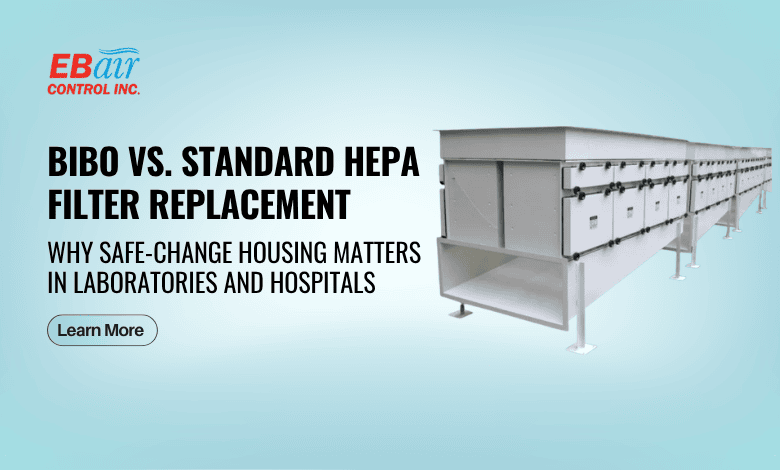
A BIBO housing HEPA filter setup is built with containment in mind. Every part of the structure supports controlled handling. Because of this, the process feels predictable and secure.
Unlike standard filter housings, these units include access ports and sealed gloves. Through these features, the operator remains separated from the filter at all times.
In environments where a HEPA containment system is required, such designs prove valuable. With less exposure involved, the system keeps running as expected without any real disruption.
A safe change filter housing also supports consistent maintenance practices. Instead of relying on personal technique, the system guides the process.
Over time, fewer errors are observed. That consistency becomes essential in both BIBO housing laboratory filtration setups and healthcare environments.
Where Do Standard HEPA Replacement Methods Fall Short?
Traditional methods rely on open access. During removal, the filter is exposed to the room. Because of that, air filtration systems may briefly lose their protective function.
In lower-risk settings, such exposure may seem manageable. However, in controlled environments, even a small lapse may carry consequences.
A hospital HEPA filtration system often deals with sensitive conditions. Similarly, a laboratory HEPA filtration system may involve hazardous materials. In both cases, the margin for error is extremely small.
Without containment, filter replacement becomes a vulnerable moment. Even careful handling cannot fully eliminate risk.
Because of these limitations, many facilities begin shifting toward BIBO filter replacement methods. The transition often reflects a growing awareness of safety rather than a change in preference.
How Does BIBO Filter Replacement Support Long-Term Safety?
A well-designed HEPA containment system offers more than immediate protection. Over time, consistent safety practices improve overall system performance.
During BIBO HEPA filter replacement, exposure remains controlled. Because the process is enclosed, minimizing the risk becomes more than a goal. It becomes part of daily operation.
In addition, maintenance teams often feel more confident. Clear procedures and built-in safeguards reduce uncertainty.
For facilities managing a hazardous particle filtration system, such reliability matters. Every step contributes to maintaining stable air quality.
A safe change filter housing also supports long-term compliance. Rules tend to change over time, and systems are expected to adjust along the way.
Through structured handling, BIBO filter replacement aligns with those expectations. Over time, fewer disruptions occur, and system integrity remains intact.
Why Are Laboratories and Hospitals Moving Toward BIBO Housing Laboratory Filtration?
A shift has been noticed across critical environments. Facilities that once relied on traditional systems are now adopting BIBO housing laboratory filtration solutions.
This change is not sudden. Instead, it grows out of real experience with potentially contaminated filters and the concerns they bring along. In these high-stakes environments, facilities often look for holistic improvements in air distribution, including the use of air mixers in pharmaceutical applications to ensure uniform air quality.
In laboratories, even small exposure to harmful particles can quietly affect results, while in healthcare spaces, patient safety always stays front and center.
Because of this, a BIBO housing HEPA filter setup offers reassurance. Controlled handling supports both safety and operational continuity.
A HEPA containment system also ensures that air filtration systems continue functioning without interruption. That stability becomes essential in environments where conditions must remain consistent.
As time passes, attention moves away from the equipment and settles more on keeping people safe.
Final Thought
Safety during filter removal and installation cannot be treated as a minor detail. In environments where contamination risks remain high, every step must be controlled.
Through BIBO HEPA filter replacement, a safer path is established. Exposure is reduced, and the surrounding environment remains protected. As expectations continue to rise, systems that support preventing contamination become essential.
A safe change filter housing and a reliable Bag In Bag Out System offer a structured solution. Instead of relying on manual care, safety becomes built into the process.
Facilities that manage complex filtration system demands often turn toward trusted solutions like EB Air Control, where containment and performance are carefully balanced.
In the end, protection of people and environments remains the true priority.
FAQs
Why is BIBO HEPA filter replacement considered safer than standard methods?
A BIBO HEPA filter replacement process keeps things closed off while the work is being done. The filter is never directly exposed, as it stays within sealed bags the whole time. This approach helps limit how much airborne contamination can escape into the area.
How does a Bag In Bag Out System prevent contamination?
A Bag In Bag Out System keeps the filter enclosed while it is being handled. Since it stays sealed inside protective bags, there is less chance of anything escaping. That makes preventing contamination feel a lot more controlled, even when dealing with a contaminated filter.
Where are BIBO housing HEPA filter systems commonly used?
A BIBO housing HEPA filter system is usually found in spaces where control really matters, like laboratories and healthcare settings. In these environments, steady air quality and lower exposure risks tend to stay a constant priority.
What role does a safe change filter housing play in filtration systems?
A safe change filter housing makes the whole process feel a bit more manageable. Since safety features are already part of the setup, there is less room for small mistakes. Over time, filter replacement tends to feel more steady and less uncertain.
How often should filters be replaced in a HEPA containment system?
There is no fixed schedule for every setup. Usage and exposure tend to shape how often filters are checked. In a HEPA containment system, higher-risk conditions often mean checks happen more regularly. Keeping an eye on it helps the system continue to meet strict performance expectations.