Common HVAC Challenges in Wastewater Treatment Plants and How Bubble Tight Dampers Solve Them

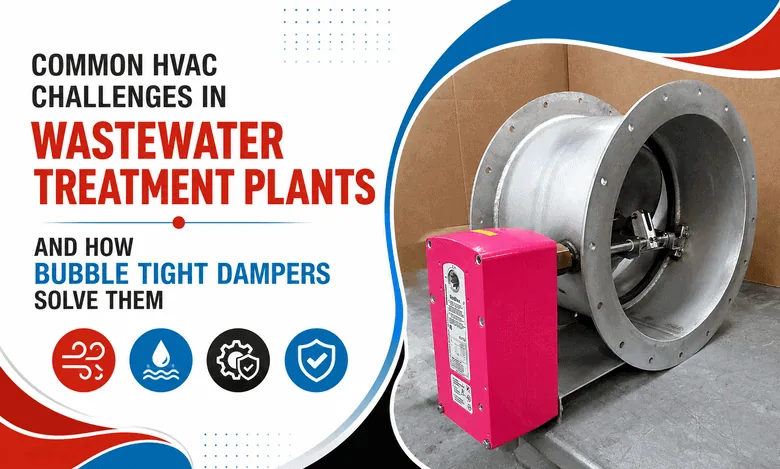
Wastewater treatment plants operate in one of the harshest indoor environments any HVAC system will ever face. Between constant moisture, corrosive gas exposure, and persistent odor sources, ventilation equipment here works far harder than it would in a typical commercial building. When HVAC systems aren’t built to handle these conditions, the results show up quickly — corroded components, odor complaints from nearby residents, and equipment that fails long before its expected lifespan. This is where bubble tight dampers have become a practical, proven fix, helping facilities isolate air streams cleanly and protect both people and equipment from the plant’s toughest conditions.
Why HVAC Systems Face Unique Challenges in Wastewater Treatment Plants
Unlike office buildings or retail spaces, wastewater treatment plants generate their own hostile atmosphere around the clock. Process areas are continuously exposed to high humidity, and many zones release hydrogen sulfide (H₂S) along with other corrosive gases as part of normal treatment operations. On top of that, odor control isn’t optional — it’s often tied directly to community relations and regulatory permits. All of this pushes ventilation demands higher than in most industrial settings, and it means HVAC equipment has to manage airflow precisely while standing up to conditions that would degrade standard components within a few years. Add strict safety and environmental compliance requirements into the mix, and it’s clear why plant engineers can’t rely on off-the-shelf HVAC solutions — many end up turning to a bubble-tight industrial damper built specifically for this kind of high-demand isolation.
Related Post: Mixing with a Breath of Fresh Air: Air Mixers in Pharmaceutical Applications
Common HVAC Challenges in Wastewater Treatment Plants
Across most facilities, a handful of recurring problems tend to show up regardless of plant size or location.
Air Leakage and Pressure Control Issues
Many wastewater facilities depend on maintaining specific pressure zones to keep contaminated air where it belongs. When dampers leak — even slightly — that pressure balance breaks down. Air escapes through gaps that were never meant to be there, HVAC systems have to work harder to compensate, and overall efficiency drops. Over time, this leakage adds up to real energy losses and inconsistent airflow control across the plant.
Odor Containment Problems
Odor migration is one of the most visible issues a treatment plant can face, and it’s usually the first thing that draws attention from nearby residents or regulators. When air handling isn’t fully sealed, odorous air can drift into occupied areas, administrative buildings, or even beyond the property line. Beyond the obvious complaints this generates, it can also put a facility at risk of falling out of compliance with local air quality standards.
Corrosion and Equipment Degradation
Hydrogen sulfide and moisture are a punishing combination for standard HVAC components. Metal parts corrode faster than expected, seals degrade, and mechanical linkages that once moved smoothly start to seize up. The end result is equipment that needs replacing well ahead of schedule, along with maintenance budgets that climb year after year just to keep systems functional.
Maintenance Downtime and Operational Risks
Servicing HVAC equipment in a treatment plant isn’t as simple as it is elsewhere. Technicians often need to shut down or isolate sections of the system before they can safely work on them, and if isolation isn’t reliable, that creates real safety exposure — to corrosive gases, to contaminated air, or to both. Frequent breakdowns caused by the conditions above only make this cycle worse, chipping away at overall system reliability.
How Bubble Tight Dampers Address These Challenges
Bubble tight dampers are purpose-built for situations where absolute air isolation matters — not just reduced leakage, but as close to zero leakage as mechanical dampers can achieve. Once engineers understand how bubble tight dampers works within a pressurized or corrosive duct system, it becomes clear why this level of sealing performance is exactly what makes them well suited to the demands of wastewater treatment environments.
Eliminating Air Leakage
Because bubble tight dampers are engineered to seal fully when closed, they prevent the slow air loss that standard dampers allow. This gives facilities much tighter control over airflow and pressure zones, and it takes pressure off the rest of the HVAC system to compensate for leaks it was never designed to handle.
Supporting Effective Odor Control
With a true seal in place, contaminated or odorous air streams can be isolated far more effectively. Instead of relying on dilution or containment that only partially works, facilities gain a dependable barrier between treatment processes and occupied or public-facing spaces — a meaningful step toward better indoor and surrounding air quality.
Enhancing Equipment Protection
Limiting the movement of corrosive, moisture-laden air through the system reduces the exposure that damages downstream components. That translates directly into longer service life for HVAC equipment and fewer unplanned replacements.
Improving Operational Reliability
When maintenance teams need to isolate a section of the system, a bubble tight damper gives them confidence that isolation actually holds. That makes inspections and repairs safer, reduces the chance of contamination spreading to adjacent areas, and generally makes planned maintenance far less disruptive.
Key Benefits of Installing Bubble Tight Dampers in WWTP Facilities
- Improved worker safety during maintenance and isolation procedures
- Better containment and management of odors
- Lower energy losses from air leakage
- Enhanced overall HVAC system performance
- Longer equipment lifespan, even in corrosive environments
- Reduced long-term maintenance costs
- Stronger support for regulatory and environmental compliance
Conclusion
HVAC systems in wastewater treatment plants have to contend with moisture, corrosive gases, odor control demands, and safety requirements that most other facilities never encounter. Left unaddressed, these conditions lead to air leakage, odor complaints, premature equipment failure, and costly maintenance downtime. Bubble tight dampers offer a proven way to tackle these issues at the source, giving facilities the reliable isolation they need to protect both equipment and people. For plant owners and engineers evaluating their ventilation systems, it’s worth taking a closer look at where bubble tight dampers could strengthen performance in the most critical isolation points across the facility. Working with an experienced HVAC products manufacturer, such as EB Air Control, can help facilities select and specify the right damper for their specific isolation and containment needs.