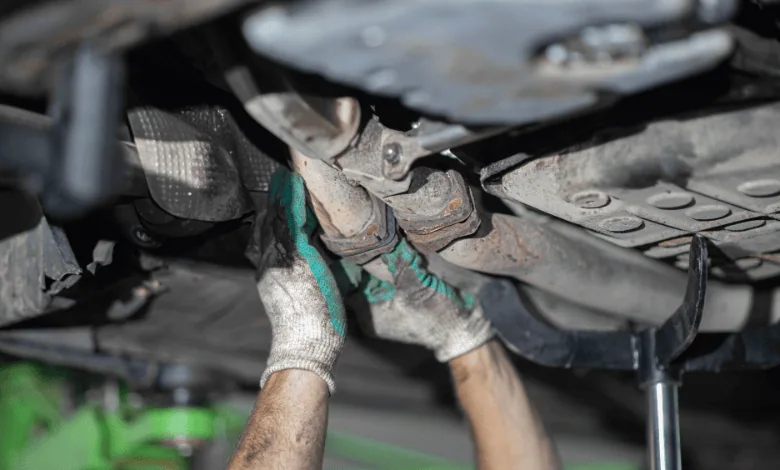
Fuel loss does not usually happen overnight. It builds slowly, almost in the background, until those extra fuel stops start to feel normal. A worn muffler often plays a part in that shift, affecting how exhaust moves through the system. As that flow changes, damaged muffler fuel efficiency becomes easier to notice. The engine starts working a little harder, even on simple drives, and over time, that shows up as lower mileage and higher fuel costs.
Why does a damaged muffler quietly reduce fuel efficiency?
A healthy exhaust system keeps engine breathing balanced and smooth. Once damage appears, that balance slowly gets disrupted.
A damaged muffler fuel efficiency issue often begins with poor airflow control. When exhaust flow slows down or gets uneven, the engine does not burn fuel cleanly. To make up for that, it quietly starts using more fuel than usual. That leads to noticeable decreased fuel efficiency over time.
Meanwhile, muffler affecting fuel economy becomes harder to ignore during daily driving. Fuel usage rises even during short trips and steady speeds. In many cases, car exhaust system issues remain unnoticed until mileage drops significantly. By then, internal components already experience additional strain.
How does restricted exhaust flow increase fuel consumption?
Exhaust flow does not usually change in an obvious way. It often begins with small wear, like a minor leak or buildup that stays unnoticed. Gradually, gases stop moving smoothly, and the pressure becomes uneven. Nothing feels urgent at first, yet over time, the engine starts to feel that quiet strain during everyday driving.
As the flow becomes restricted, the engine ends up putting in more effort just to keep things running at the same level. That extra work often leads to higher fuel use, even when driving habits stay the same. An inefficient exhaust system slowly pushes the engine out of its natural rhythm, and that is where fuel loss starts to show up more clearly.
At the same time, exhaust system fuel efficiency problems begin to interfere with how sensors read the air and fuel balance.
The oxygen sensor works best when exhaust flow stays steady and consistent. When that flow gets a bit uneven, the readings can drift slightly, even if nothing feels off right away. As the engine adjusts to those changes, it may start using a little more fuel than needed. Over time, that quiet shift begins to show up as lower fuel efficiency.
What happens when leaks allow gases to escape too early?
Small cracks or rust spots rarely stand out in the beginning. The car keeps running as usual, so nothing feels off right away. Still, those small flaws can slowly turn into a leaking exhaust, letting gases escape sooner than they should. When that happens, the system loses its natural flow, especially when the exhaust pipe has already seen some wear.
At first, the change feels easy to overlook. Drives stay smooth, and there is no clear sign of trouble. Yet underneath, the balance starts to shift. Exhaust gases no longer move the way they once did, and that quiet change begins to affect how the system supports the engine over time.
As those small leaks stick around, things start to feel a bit less reassuring. At times, exhaust gases may begin entering the cabin, and the change can feel a bit off during regular drives. Since carbon monoxide has no noticeable smell, the situation often goes unnoticed until it starts to raise concern.
Alongside that, muffler performance problems begin to show in subtle ways. The engine may lose a bit of its earlier smoothness, while fuel usage slowly climbs without a clear explanation. The difference appears over time, and the car begins to feel less effortless during everyday drives. Energy that should support performance gets lost through those small openings, and the car starts using more fuel than necessary.
Once the issue gets fixed, the difference often feels noticeable. Proper sealing allows the system to return to its normal flow, and muffler repair fuel consumption improvements tend to follow soon after. Fuel use becomes more stable again, and the car feels closer to how it used to run.
Why do unusual noises signal deeper fuel efficiency problems?
Strange sounds rarely appear without underlying mechanical stress. A slight rattle or steady hum can point to wear inside the muffler. At first, it does not feel like much since the car keeps running as usual. But those unusual noises often come up early and suggest the muffler may be starting to weaken. Ignoring them allows internal damage to spread further, often without any clear warning beyond the sound itself.
A broken exhaust section can gradually move out of place without much warning. The change feels small, almost unnoticeable, yet it affects how air flows through the system. Since the car still runs, it often does not raise concern right away.
As time passes, muffler affecting fuel economy becomes easier to notice, especially when the car does not pick up speed as smoothly. It feels slightly off, though nothing seems serious. Behind the scenes, the engine uses more fuel just to keep up. Gradually, that change shows up in lower gas mileage. In such situations, muffler repair Toronto services often help restore both performance and fuel balance.
How do road conditions and corrosion make things worse?
Moisture and road salt tend to stick around during colder months, often without being noticed. In the beginning, the car feels no different at all. But as time passes, that quiet buildup slowly starts wearing down the metal underneath.
Corrosion tends to work slowly on metal parts. At first, it just weakens the surface, but small cracks can follow without much warning. Nothing changes overnight, but that slow wear starts to reach different parts of the car’s exhaust system, and the impact builds quietly over time.
After a while, an inefficient exhaust system can develop from that ongoing damage. Exhaust flow may not stay as smooth, and the system no longer supports the engine the way it once did. It is the kind of change that builds slowly, often noticed only after it starts affecting everyday driving.
What role do sensors and components play in fuel loss?
Modern vehicles depend quite a bit on sensors to keep fuel use in check. When the muffler starts to wear out, the balance does not stay quite as steady as before. Nothing feels off right away, and the car keeps running as usual. Those readings do not always stay perfectly steady. Even a small shift can quietly change how everything works over time.
The oxygen sensor depends on a steady exhaust flow to keep readings consistent. When that flow becomes uneven, the sensor may send slightly off signals, and the engine adjusts fuel in response. At the same time, the catalytic converter may not work as smoothly, and over time, that quiet imbalance begins to affect fuel use.
When does repair make a noticeable difference in fuel use?
Once the exhaust system is sorted out, the change can be felt sooner than expected. The car starts to feel a bit smoother, almost like it is not trying as hard during regular drives. Exhaust flow returns to normal, and the engine does not have to put in that extra effort it quietly carried before.
Nothing changes at once, and there is no sudden shift. Still, over a few drives, things begin to feel more settled. The car feels lighter, more at ease, and closer to how it used to run.
Fuel use also tends to even out during regular driving. A careful check from a trusted muffler repair shop near you can help catch the smaller issues that may have gone unnoticed earlier. In many cases, muffler repair fuel consumption improvements show up fairly soon, along with a quieter and smoother ride. For more stubborn concerns, muffler repair Toronto specialists usually take a closer look to sort out anything deeper within the system.
Final Thought
Fuel efficiency usually does not change without a reason, and muffler damage often plays a quiet part in it. The link between damaged muffler fuel efficiency and engine health tends to build slowly. In the early stages, the difference feels so small that it is easy to let it pass.
The early signs of a failing muffler rarely feel urgent. They do not seem like a problem in the moment. Over time, those minor concerns can slowly turn into something more noticeable. A well-kept exhaust system helps maintain safety and keeps fuel use from drifting higher.
Regular checks can make a real difference, especially before small issues grow further. A visit to Fine Tuned Autos can help make sense of what is going on beneath the surface. With a bit of attention at the right time, both fuel efficiency and overall comfort tend to stay in a better place.
FAQs
How does a damaged muffler affect daily fuel usage?
Fuel use usually does not jump all at once when a muffler starts wearing out. It tends to creep up slowly. As the exhaust flow becomes uneven, the engine no longer runs as efficiently as it used to. To keep things feeling the same on the road, a little more fuel gets used along the way. At first, that change is easy to miss. Nothing feels dramatically different during a drive. But over time, those small increases begin to show up, often through more frequent fuel stops and a gradual drop in mileage.
What are the early signs of a muffler problem?
Loud noises, vibrations, and a drop in gas mileage often appear together. These changes usually indicate early exhaust trouble. A slight burning smell or visible rust may also suggest damage. Addressing these signs early helps prevent further fuel loss and system damage.
Can leaking exhaust really impact engine performance?
A leaking exhaust can throw off how gases move through the system. That change can affect sensor readings and how the engine handles combustion. Nothing feels sudden, but the car may start using more fuel, and the overall drive can feel a bit less steady.
How often should a muffler be checked for fuel efficiency issues?
Routine checks during regular servicing usually help keep things on track. It also helps to have a look after harsh weather, when wear tends to build up a bit more. Noticing small problems early on can help avoid bigger repairs later and keep fuel use from quietly increasing.
Will repairing a muffler immediately improve gas mileage?
Improvements often appear soon after proper repairs get completed. Restored airflow allows the engine to function more efficiently. While results may vary slightly, most vehicles show better fuel economy within a short period.
Don’t stop now! Here are more topics you might find interesting.